


Pope Leo XIV urged an estimated 40,000 people in Uruguay on Saturday to build bridges of fraternity and faith, as he used his first Mass in South America to deliver an ode to the region’s beloved mate tea and raise the profile of the Catholic Church in its most secular country.
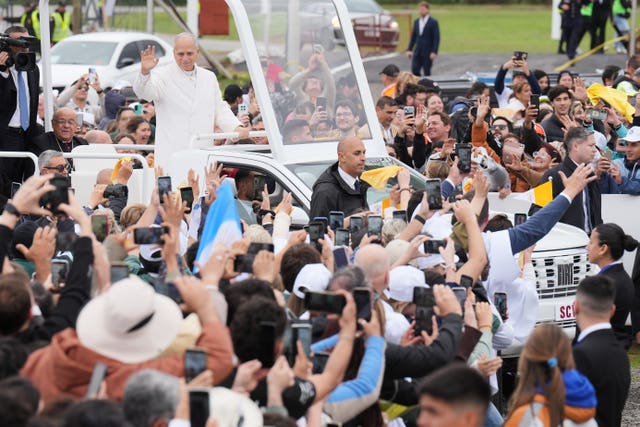
The crowd erupted in a chant of “ole, ole, ole, ole, Pope, Pope!” when Leo’s plane landed in Paysandu, in western Uruguay on the border with Argentina.
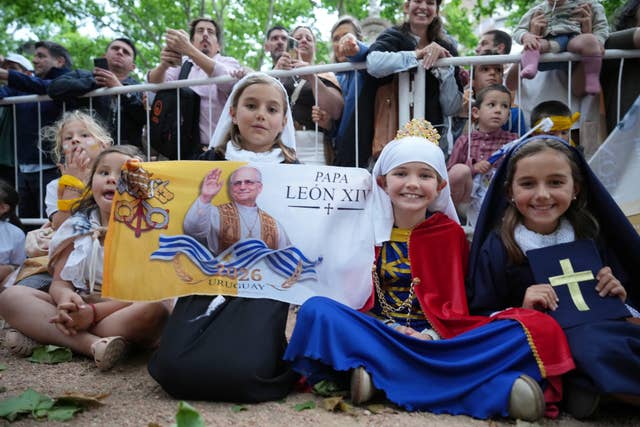
They cheered again, blew horns and waved yellow handkerchiefs when he arrived in his open-sided popemobile at the Mass site in the Parque Paris Londres, a sprawling green space on the southern edge of Paysandu.
More than 30,000 people — many from Uruguay but also from neighbouring Argentina and Brazil — had registered in advance to attend the service, around 230 miles from the capital, Montevideo.
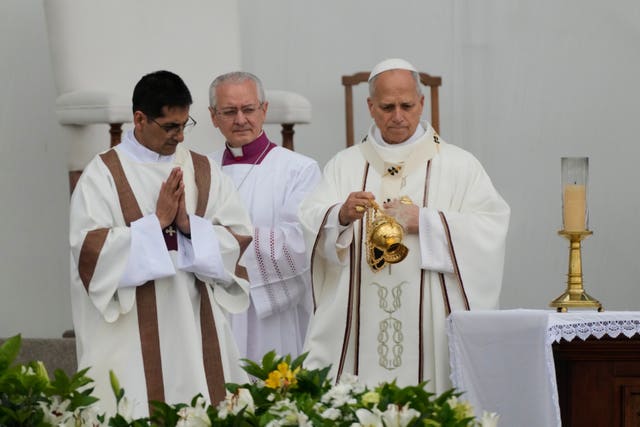
The Vatican said on Saturday another 10,000 had shown up beyond that, despite the morning rain and blustery, grey skies.
It was the first Mass of Leo’s three-nation South American tour that had been in doubt after the 71-year-old American pope underwent lung cancer surgery on October 13.
Crowds of faithful in rain ponchos, many in the Vatican’s yellow, began streaming into the site when the gates opened at 5.30am as a band played popular Spanish hymns. Some in the crowd said they were deeply moved that Leo pressed on with his ambitious 12-day tour despite his recent cancer diagnosis.
“He’s the representative of Christ but he’s human. And we weren’t sure if he could make it, but he pushed through for us,” said Soledad Sanchez, 73, who had driven to Paysandu from northern Uruguay, her eyes filling with tears. “He made it here to give us a message of peace because he knows our world needs it right now.”
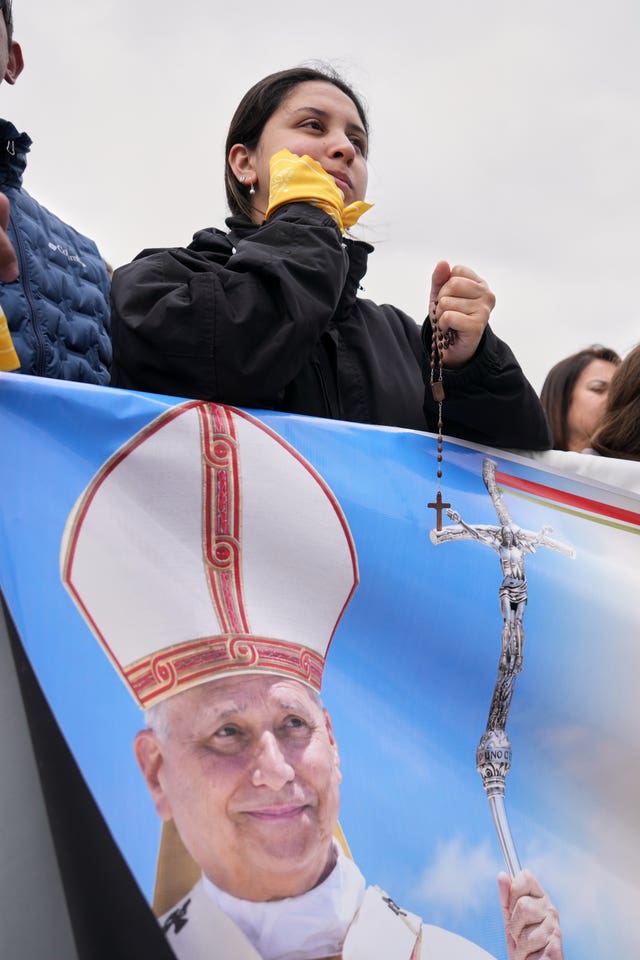
Leo, who arrived in Uruguay on Friday and had an intense afternoon and evening of events, is seeking to urge the people in South America’s most secular country, with a population of 3.5 million, to turn to the Catholic faith for strength in confronting today’s problems and challenges.
In his homily, Leo urged the faithful to build bridges of faith and fraternity, recalling the nearby bridge over the Uruguay River that unites Uruguay and Argentina and over which many pilgrims travelled to attend the Mass.
He also pointed to the ritual of drinking mate, the ubiquitous bitter herbal tea that Uruguayans and their neighbours carry everywhere, as a poignant symbol of unity and encounter that he suggested should be applied to spreading the faith today.
Mate, a cherished national symbol in Paraguay, Argentina and Uruguay, is above all a sharing ritual. The leaves are steeped in a hollowed gourd and sipped through a metal straw called a bombilla, and the gourd passes from hand to hand among friends, family and sometimes strangers, refilled for hours.
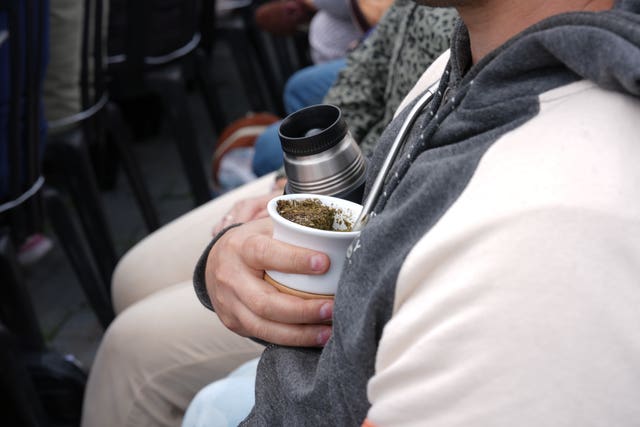
Everyone drinks from the same straw, and Uruguayans drink more mate per person than anyone else in the world, according to industry estimates.
In his comments, Leo delivered an ode to mate.
“It teaches us to share and to be together, strengthening the bonds that unite us as brothers and sisters,” he said, drawing a round of applause and a smile from the Pope.
Symbols such as mate give identity and a sense of belonging that point to the future, he said.
“Faith, too, has been part of the life of the Uruguayan people since their earliest days, and it must be passed on to future generations with creative courage,” he said.
Leo was to press the message of the church’s commitment to helping Uruguayans later Saturday by touring a Montevideo neighbourhood beset by drug trafficking and gang violence, where the church is working with municipal authorities to build housing and provide rehab programmes for addicts.
His final event, too, was likely to drive home the call to reject religious indifference and embrace the faith: a prayer vigil in Montevideo’s Centenary Stadium.
At an evening vespers service on Friday in Montevideo’s cathedral, Leo acknowledged many people in the country do not even know about the faith or its heritage that is intrinsically tied to Uruguay’s independence and nationhood.
The Catholic Church, for example, had no new seminarians in Uruguay in 2024, though a few have since entered training for the priesthood.
Leo told the seminarians, priests and bishops to model themselves on Christ to attract the faithful.
“One of the secrets of evangelisation is to resemble the one whom we proclaim,” Leo said. “In this land, where many of our contemporaries barely know Jesus Christ and so many young people have grown up far from the life of the church, that witness has a special power.”
Located in western Uruguay and just across a bridge from the eastern Argentine city of Colon, Paysandu was easier to reach for many Argentines than any of the stops on Leo’s part of the tour in Argentina, his next stop after Uruguay.
In Argentina, Leo will visit Buenos Aires, Lujan and Cordoba before heading to Peru, his second homeland and the final destination of his tour.
“Argentina is a much more religious country than Uruguay, and there’s this desire to be here to witness something historic,” said Luciana Lobato, 20, an Argentine tour agent who organised buses of 180 pilgrims from across the border.
Some young Catholics involved in local church groups hoped the sight of a pope drawing crowds would challenge Uruguay’s image as a country indifferent to religion.
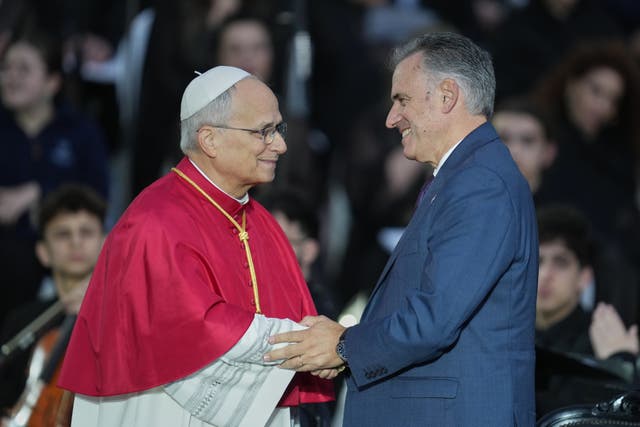
“The reality I see in my town is that there are tons of young people who are really interested in religion, who are trying to find meaning and community in difficult moments,” said Teresa Sabellini, 18, from Paysandu.
“And now look around here. This place is full of people,” she added.
Still, Paysandu itself greeted the Pope quietly, as though it was an ordinary weekend, with scant decorations and only a few homes seen flying Vatican flags.
Saturday’s Mass is dedicated to Blessed Jacinto Vera, a 19th-century priest who became Uruguay’s first bishop. Leo praised him on Friday as a pastor who travelled the country’s roads to help the poor, saying that people who met him “found something of Christ’s goodness” even before he preached.


Share