



A High Court judge has praised Blackburn with Darwen Council's efforts to protect a vulnerable teenager while delivering a scathing assessment of how mental health services and other public bodies have responded to the child's needs.
His Honour Judge Burrows said social workers had been dealing with an "extraordinarily difficult child protection and welfare situation" and had worked at the limits of what could reasonably be expected.
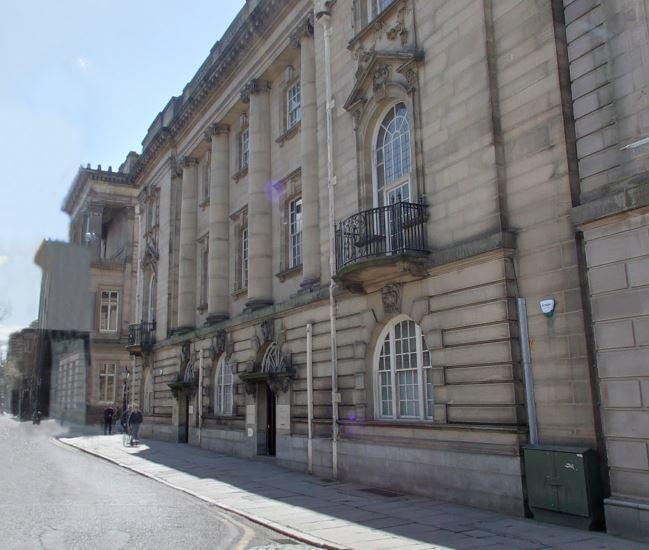
But in a strongly-worded judgment handed down at the Family Court in Sessions House, Preston, he questioned whether wider agencies had done enough to support a child who has spent years caught in repeated crises.
The teenager, who cannot be identified for legal reasons, is at the centre of care proceedings brought by Blackburn with Darwen Council.
The court heard the child has a long history of self-harm, suicidal thoughts, absconding and vulnerability to exploitation, leading to repeated interventions by police, ambulance crews and hospital staff.

On one occasion, an entire children's ward had to be cleared so the teenager could be detained under constant supervision.
Sedation has also been used as professionals attempted to manage the risks.
Judge Burrows said the evidence painted a picture of a young person who had spent years "oscillating between crisis and temporary stabilisation" while agencies struggled to find a regime capable of meeting their needs.
The teenager's latest specialist placement has now broken down and they remain in hospital because there is no safe discharge plan.
The judge said the child was no longer receiving treatment for physical conditions that could not be provided elsewhere, but was instead being kept in hospital under constant supervision while decisions were made about their future.
He described the circumstances as "extraordinary".
The court also heard the child had recently been involved in repeated self-harm incidents and concerns had been raised about potentially fatal consequences.
Read more
-
Ribble Valley Pub Walk raises record £58,000 for East Lancashire Hospice
-
New Shoezone store to open in Blackburn town centre this weekend
Despite that, the teenager had repeatedly been assessed as not meeting the criteria for detention under the Mental Health Act.
While Judge Burrows accepted those decisions were matters for qualified psychiatrists, he questioned how a child facing such serious risks could be considered suitable for management in the community without a clear treatment pathway.
In one of the judgment's strongest passages, he said: "One is left with the uncomfortable impression that mental health services have been rather more successful in explaining why they cannot help than in explaining how they will help."
He also criticised the lack of clarity around how therapeutic interventions identified as necessary would actually be delivered, by whom, and where.
Judge Burrows warned the court was once again facing a situation in which every professional involved accepted a child faced extraordinary risks and required intensive support, yet there was "no coherent agreement" about who ultimately bore responsibility for ensuring that support was provided.
As a result, Lancashire and South Cumbria NHS Foundation Trust (LSCFT) is to be joined to the proceedings so the court can hear directly from the organisation responsible for psychiatric assessment and treatment.

The judge also ordered that his judgment be sent to senior national figures including the Secretary of State for Health and Social Care, the Lord Chancellor and the Children's Commissioner for England.
Responding to the judgment, a Department of Health and Social Care spokesperson said: "No child or family should ever feel they have nowhere to turn when they need mental health support. That is why this government is committed to improving outcomes for all children, particularly the most vulnerable.
"We have introduced the most far-reaching child protection reforms in a generation through the Children's Wellbeing and Schools Act. Later this year, our Mental Health Strategy will outline how we plan to build a more preventative system that responds earlier and reduces waiting times for support.
"We are improving access to vital services and information sharing between social workers, health professionals and the police, so they can work together better to protect vulnerable children."
A spokesperson for Lancashire and South Cumbria NHS Foundation Trust said: "Lancashire and South Cumbria NHS Foundation Trust is unable to comment on individual cases."


Share