






Stargazers will be looking to the skies this evening (August 12) in the hopes of catching a glimpse of the biggest solar eclipse visible from the UK in decades.
More than 90 per cent of the sun will be obscured by the moon between 6.17pm and 8.06pm on Wednesday, the most it has been blocked above UK skies since the total eclipse in 1999.
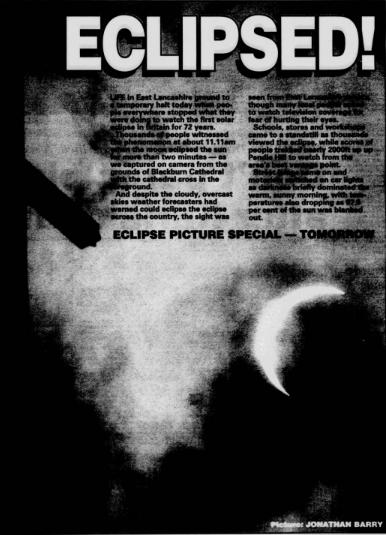
On Tuesday, August 11, 1999, life in East Lancashire came to a temporary halt as thousands of residents paused their daily activities to witness the first solar eclipse in Britain for 72 years.

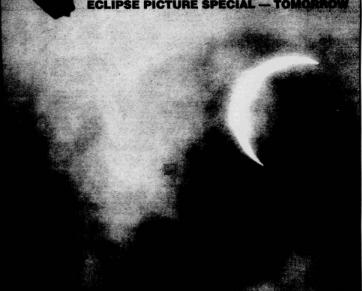
The extraordinary phenomenon occurred on Tuesday, August 11, at approximately 11.11am, when the moon eclipsed the sun for over two minutes.
Despite the cloudy and overcast skies that weather forecasters had warned could obscure the view, many locals were able to catch glimpses of the eclipse, while others opted to watch television coverage to avoid eye damage.
Schools, stores, and workplaces across the region came to a standstill as people ventured outside to witness the spectacle.
Some trekked nearly 2,000ft up Pendle Hill, seeking the best vantage point to observe the event.
The Lancashire Telegraph reported on the excitement, stating: "What a spectacle, despite all the clouds!"
A variety of methods were employed by the public to safely view the eclipse.
Some used cardboard pin-hole contraptions, while others relied on special filters or peered at reflections in buckets of water or windows.

The area was brought to a standstill shortly after 11am, as the moon eclipsed the sun, prompting thousands of local people to stop what they were doing to watch.
However, the heavy cloud cover meant that viewers were only treated to occasional glimpses of the sun and its moon shadow.

One disappointed bystander, great-grandmother Ada Gibson from Clayton-le-Moors, expressed her dismay: “I saw the last eclipse at school in Haslingden when I was seven and I’ve been telling all my family about how special it was going to be.
“But at 11am it wasn’t dark, it was just like a stormy day and a big, black cloud was blocking out the sun.
“I’m disappointed because we would have had a wonderful sight of it and I would have seen two total eclipses.”
Angela Woodcock, assistant manager of Oddie’s bakery in Blackburn Shopping Centre, shared her experience: “We closed the shop but I don’t think anyone noticed because there were no customers anyway and they were all watching it too and most of the shops around us did the same.
“We went outside, although we couldn’t see it clearly because of the clouds it did go dark and very cold. It was strange but brilliant, really good.”
In Accrington, several shops closed during the eclipse, while Hyndburn Council employees were allowed to stop work, the report stated.
According to the report, one person went to Blackburn Royal Infirmary suffering from the effects of glare and two people rang for advice later.
As the eclipse reached its climax, temperatures began to drop, and automatic security lights activated in the near-darkness.
Read more
More than 300 arrested and thousands of drivers reported in 2-month police operation
Police led on chase after spotting stolen Kia Ceed - here's what happened next
Fire service investigating fence fire that spread to house
Closer to home, Blackpool’s Golden Mile basked in twilight, with the lights on the Tower and Big Wheel illuminating the scene.
Across Lancashire this evening, more than 91 per cent of the sun will be obscured and the 2026 eclipse is set to be far less cloudy than the sky in 1999.
Lancashire has a variety of prime locations for viewing the solar eclipse.
From as early as 5.45pm, Moor Park in Preston will facilitate a free public viewing organised by the University of Lancashire's Jeremiah Horrocks Institute and the Preston & District Astronomical Society.
Other recommended sites include Pendle Hill, Beacon Fell Country Park, Rivington Pike, Fairhaven Lake, Glasson Dock, Longridge Fell, and the Forest of Bowland viewpoints.
Local beaches and promenades, such as Morecambe and St Annes, provide excellent viewing opportunities due to their unobstructed coastal vistas.


Share