



The MP for Burnley has furiously pushed back against government plans to abolish Lancashire’s local councils, citing fears that his town would merely become part of ‘greater Blackburn’.
The UK Government announced its long awaited reorganisation of local authorities in the House of Commons today (July 16), effectively cutting the number of councils across England in half by abolishing the two-tier system.
For Lancastrians, this means just four unitary authorities ruling over the county, rather than the previous patchwork of lower-tier councils, Lancashire County Council, and already-existing unitaries like Blackburn with Darwen and Blackpool.
But while this move is expected to simplify politics for residents and save taxpayer money, Oliver Ryan MP said the plan for East Lancashire has effectively created the most deprived local authority in England.
He also reiterated concerns over where power will be concentrated in the new 'Pennine Lancashire' authority.

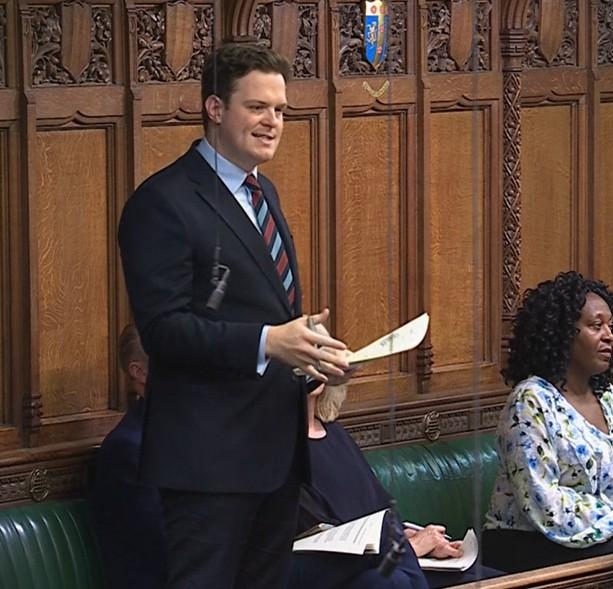
Responding to Secretary of State for Communities, Housing, and Local Government Steve Reed’s statement on the reorganisation in the Commons, Mr Ryan spoke with fury about the impact that the reforms would have on his constituents.
He said: “I am so angry with these proposals, this new East Lancs authority with Blackburn, but without the Ribble Valley, by our own statistics will have created the most deprived local authority in the country, with an awful lot of debt already on its books.”
Burnley Council had preferred a five-council model for Lancashire, which would have placed the town with Pendle and Rossendale, expressing strong opposition to being merged with Blackburn.
The MP himself originally backed a three-council model, but has since come out in support of his town hall’s plan.
Along with historic inter-town rivalry, the crux of the issue for many politicians in Burnley is that a large established unitary authority like Blackburn with Darwen Council, on the other end of the new East Lancashire boundaries, would effectively rule over the town and cause a democratic deficit.
However, no decisions have been made as yet regarding the number of wards across the region or where the seat of power will be, with several town halls to choose from.
Pushing back against his party’s frontbench in the Commons, Mr Ryan went on to say: “I can't support this, Burnley will not stand for being part of greater Blackburn.”
Read more
East Lancashire’s new council and political landscape revealed in huge shake up
Lancashire man in his 40s pleads guilty to harassing MP
Lancashire government reorganisation set to be to a four-council set up
He made clear that Blackburn was the sticking point for these proposals, saying: “The HQ of this new authority must not be in Blackburn.
"The accountable officer must not be a Blackburner, and our people, our bondholders, our culture, our businesses, and our communities cannot be steamrolled and forgotten in this way."
In response, Mr Reed said the Burnley MP ‘always champions the interests of his residents’.
He added: “With fair funding, we have realigned government funding for local authorities with deprivation and need that will ensure that funding is distributed fairly in a way that it was not over the past 14 years of the previous government.”
The Secretary of State also explained how he had settled on a four-council model.
He explained: “The decisions for Lancashire were taken in part because of the strong alignment with economic areas, commuting patterns and transport links.
“Because that is the way that we can attract inward investment that will bring the jobs and put money in the pockets of his constituents and other people across the county of Lancashire.”


Share